
Latest insight.
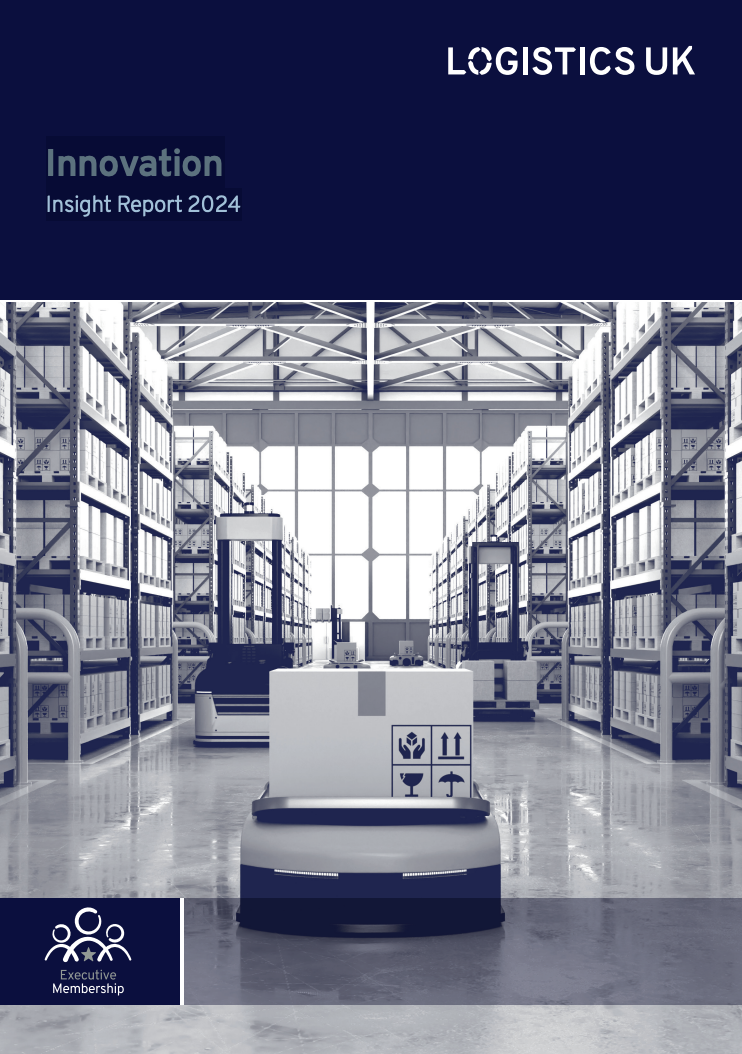
The 2024 Logistics UK Innovation Report explores how the sector is responding to mounting pressure on the UK’s Strategic Road Network (SRN), the drive toward decarbonisation, and the need to modernise skills across logistics. Contributions from industry leaders - including Adam Parkinson, Founder of GoLink Advisory Group - highlight both the opportunity and realism shaping the future of modal shift.
Rethinking rail’s role in the logistics system
Modal shift continues to be seen as one of the clearest opportunities to reduce congestion on the UK’s road network and lower transport emissions. Rail freight already plays a vital role in moving bulk commodities, but its use remains largely concentrated in heavy and low-value freight flows. For smaller, time-sensitive consignments - particularly in the courier, express and parcel (CEP) market - rail has historically struggled to compete.
Innovation is beginning to challenge that position.
In 2023, RailX launched a digital solution designed to make rail freight more accessible to smaller operators by selling spare capacity on existing services. By improving visibility and flexibility, the platform aims to lower the barriers to entry that have traditionally limited rail to larger shippers.
At the same time, Adam Parkinson, through GoLink Advisory Group, secured small grant funding from Connected Places Catapult to develop a business case for a new high-speed intermodal rail freight model tailored specifically to the CEP sector. The concept focuses on increasing rail freight speeds using high-speed wagons combined with intermodal containers that enable faster loading and unloading.
The ambition is clear: to make rail commercially viable for time-sensitive parcel traffic - a segment long dominated by road transport.
Structural realities and commercial constraints
Despite the innovation, structural challenges remain. Much of the UK’s warehousing infrastructure has been developed around the Strategic Road Network, embedding road freight into supply chains. Even where rail is used for the trunk haul, first-mile and last-mile road movements are still required.
Capacity is another limiting factor. Rail does not have the headroom to absorb all road freight flows, and commercial success depends on operators consistently filling services. Without reliable volumes, high-speed intermodal services will struggle to scale.
Parkinson also points to a potential longer-term shift in how rail capacity is prioritised between passenger and freight services. While the rail landscape may not look radically different in a decade, there is optimism that freight will play a more strategic role - particularly as decarbonisation targets intensify and new operating models mature.
Innovation and the changing workforce
Alongside modal shift, the report highlights the implications of innovation for the sector’s workforce.
As technology advances, job roles are evolving. Automation, artificial intelligence and digital platforms are reducing labour-intensive and repetitive tasks such as warehouse picking and route planning. In some future models, drivers may operate vehicles remotely from control centres, monitoring multiple assets in improved working environments.
However, innovation does not necessarily eliminate roles - it changes them. While certain driver jobs may evolve, they may not require entirely new skill sets.
Adam Parkinson highlights another pressing challenge: rail’s ageing workforce and the need for innovation within legacy systems. The sector must find ways to modernise while still working with long-established infrastructure and processes. This requires a blend of digital capability and practical, system-level experience.
There is also a knowledge imbalance across logistics. Expertise remains heavily weighted toward road transport. To drive meaningful innovation, the sector must strengthen understanding of rail, air and warehousing operations as integrated components of the supply chain.
Encouragingly, academia and industry are responding. Universities are expanding relevant courses, and major logistics providers are investing in future-facing capabilities such as robotics and digital transport systems. The consensus is that workforce investment will be critical to sustaining innovation.
A gradual but meaningful shift
The report does not suggest a dramatic transformation of UK logistics overnight. Instead, it paints a picture of steady, targeted innovation: digital tools unlocking spare capacity, new business models testing high-speed intermodal freight, and a workforce adapting to automation and AI.
Rail will not replace road - but it may become a more dynamic, commercially responsive part of the system. If innovation continues to align with market demand and policy support, rail freight could move from being a niche alternative to a more central pillar of a decarbonised logistics network.
The full report can be accessed here.
Latest news.

Think we can help?
Let's talk.